
If you’ve been searching for natural ways to improve focus, reduce anxiety, sleep better, or support your brain health, you’ve likely come across neurofeedback. But you probably have a lot of questions including: what exactly is it, is it backed by research, and what can it help with?
Whether you’re considering neurofeedback for yourself or a family member, understanding how it works can help you decide if it’s the right fit. Let’s start with what it is.
What Is Neurofeedback?
Neurofeedback, also known as EEG neurofeedback or EEG biofeedback, is a type of biofeedback that measures the brain’s electrical activity, called brainwaves.
It is a non-invasive form of brain training that helps the brain learn to regulate itself more effectively. Rather than using medication or electrical stimulation, neurofeedback provides your brain with real-time feedback about its own activity. With repeated training, the brain can learn to produce healthier, more efficient patterns of activity.
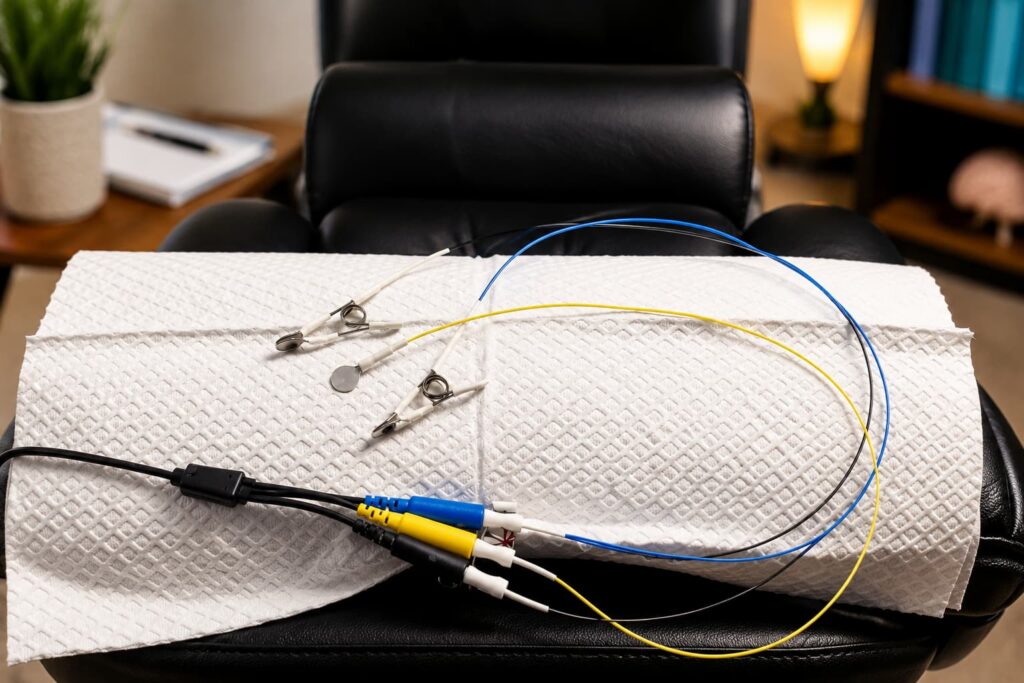
Small sensors placed on the scalp detect these brainwaves. That information is sent to specialized computer software which provides immediate feedback, usually through a video game or sounds. This lets the brain know when it is producing the desired patterns of activity.
It’s important to know that the sensors only record brain activity. They do not send electricity into the brain or change brain function directly. Instead, neurofeedback works by taking advantage of the brain’s natural ability to learn and adapt.
How Neurofeedback Works
Your brain is made up of billions of nerve cells (neurons) that communicate through tiny electrical signals. These signals create rhythmic patterns called brainwaves.
Different brainwave patterns are associated with different mental states:
- Beta waves are linked to concentration, problem-solving, and active thinking.
- Alpha waves are associated with calm, relaxed alertness.
- Sensorimotor Rhythm (SMR) is often associated with calm, focused attention and stable attention control.
- Theta waves become more prominent during drowsiness, creativity, and some aspects of memory processing.
- Delta waves are most common during deep, restorative sleep.
Healthy brain function depends on the brain’s ability to produce the appropriate brainwave patterns for the situation. Sometimes those patterns become less efficient, making it harder to focus, sleep, regulate emotions, or manage stress.
During a neurofeedback session, the computer continuously monitors your brainwaves. When your brain produces the desired activity, you receive positive feedback such as the game going or the sound playing. When the brain moves away from the target pattern, that feedback changes.
Without consciously trying, your brain begins recognizing these patterns and gradually learns to spend more time in healthier, more efficient states. This may sound strange, but the brain is doing this at the precognitive level – that is, before you think about what you are doing!
This process is based on neuroplasticity. Neuroplasticity is the brain’s lifelong ability to learn, reorganize, and form new connections.
Most people find neurofeedback relaxing. Many describe it as one of the easiest appointments of their week. Because the brain learns gradually, improvements typically occur over a series of sessions rather than overnight.
What Can Neurofeedback Help With?
Neurofeedback is designed to improve how efficiently the brain regulates itself rather than simply addressing one diagnosis.
Depending on the individual and the assessment findings, neurofeedback may be used to support:
ADHD
One of the most researched uses of neurofeedback is ADHD. Studies have found that neurofeedback may help improve:
- Attention
- Concentration
- Impulse control
- Executive functioning
- Emotional regulation
Anxiety and Chronic Stress
Individuals experiencing anxiety often describe their minds as feeling constantly “on.”
Neurofeedback may help support calmer brain activity and improve the brain’s ability to regulate stress responses.
Sleep Difficulties
Poor sleep affects nearly every aspect of brain function.
By encouraging brainwave patterns associated with healthy sleep regulation, neurofeedback may help improve sleep quality for some individuals.
Brain Fog and Mental Fatigue
Many people experiencing chronic stress, long-term illness, concussion recovery, or the hormonal changes of perimenopause and menopause report problems with:
- Mental clarity
- Memory
- Focus
- Processing speed
Neurofeedback aims to support healthier brain regulation, which may contribute to improvements in these areas.
Peak Performance
Neurofeedback isn’t only used to address challenges.
Athletes, musicians, executives, students, pilots, and other high performers sometimes use neurofeedback to improve focus, attention, resilience under pressure, and mental performance.
Neurofeedback and Safety
Neurofeedback has been used in clinical practice for decades and is generally considered safe when provided by appropriately trained professionals. Unlike electrical brain stimulation techniques, neurofeedback does not stimulate the brain with electricity. Instead, it simply measures brain activity and provides feedback that allows the brain to learn naturally.
Most people experience few, if any, side effects. Occasionally, temporary fatigue or a mild headache as the brain adjusts to training. These effects are typically short-lived and can often be addressed by modifying the training protocol.
Neurofeedback and Research
Research on neurofeedback has expanded significantly over the past several decades.
Studies have investigated neurofeedback for:
- ADHD
- Anxiety
- Insomnia
- Epilepsy
- PTSD
- Peak performance
- Stress regulation
- Traumatic brain injury
- Cognitive performance
The strongest body of evidence currently exists for ADHD, where numerous studies have found improvements in attention and executive functioning for many individuals.
Research into anxiety, sleep, emotional regulation, and menopause-related cognitive symptoms continues to grow, with encouraging results, although evidence varies depending on the condition and the specific neurofeedback approach used.
Like any healthcare intervention, neurofeedback is not a cure-all, and results vary from person to person. A comprehensive assessment and individualized treatment plan are important parts of successful care. For more information on neurofeedback, visit EEG Info.
Neurofeedback vs. Biofeedback
Often people ask whether neurofeedback and biofeedback are the same. The answer is…not exactly.
Biofeedback is a broad term that refers to using real-time information from the body to improve self-regulation.
Different forms of biofeedback measure different body systems, including:
- Heart rate
- Muscle tension
- Skin temperature
- Breathing
- Brainwave activity
Neurofeedback is simply the form of biofeedback that focuses specifically on brain activity.
Frequently Asked Questions
Does neurofeedback hurt?
No. Neurofeedback is painless and non-invasive. The sensors only record brain activity—they do not deliver electricity.
Can children do neurofeedback?
Yes. Neurofeedback is commonly used with children and adolescents, particularly for attention and self-regulation challenges.
Can I continue taking medication during neurofeedback?
Many people complete neurofeedback while continuing medications prescribed by their healthcare provider. Never change or stop medication without discussing it with your prescribing clinician.
How quickly will I notice results?
Some people notice improvements within the first several sessions, while others experience gradual changes over several weeks or months.
Is neurofeedback permanent?
The goal of neurofeedback is to help the brain learn healthier patterns of functioning. Many people continue to experience benefits after training is complete, although individual results vary.
How many sessions are needed?
This is one of the most common questions people ask. The answer depends on several factors, including your goals, symptoms (and how long they’ve been present), and your brain’s response to training. Some people notice changes within the first several sessions, while others require more time.
Many comprehensive neurofeedback programs involve 20 to 40 sessions, although this varies considerably from person to person.
Like learning a new skill or strengthening a muscle, consistency matters.
The Bottom Line
Neurofeedback is a safe, non-invasive way to help the brain learn healthier patterns of activity. By providing real-time information about brain function, it encourages the brain to regulate itself more efficiently through the process of neuroplasticity.
Whether you’re seeking help for ADHD, anxiety, sleep difficulties, stress, brain fog, or simply want to improve your mental performance, neurofeedback offers a science-based approach that works with the brain’s own remarkable ability to adapt and change.
Interested in Neurofeedback?
If you’re wondering whether neurofeedback may be right for you or your child, we’re here to help.
At our Missoula clinic, we provide individualized neurofeedback programs based on each person’s unique symptoms and goals. During a free 15-minute, no-obligation consultation, we’ll answer your questions, discuss your concerns, and help you determine whether neurofeedback may be a good fit for your needs.
Contact us today to learn how neurofeedback may help you achieve better focus, improved sleep, greater emotional balance, and lasting brain health.