
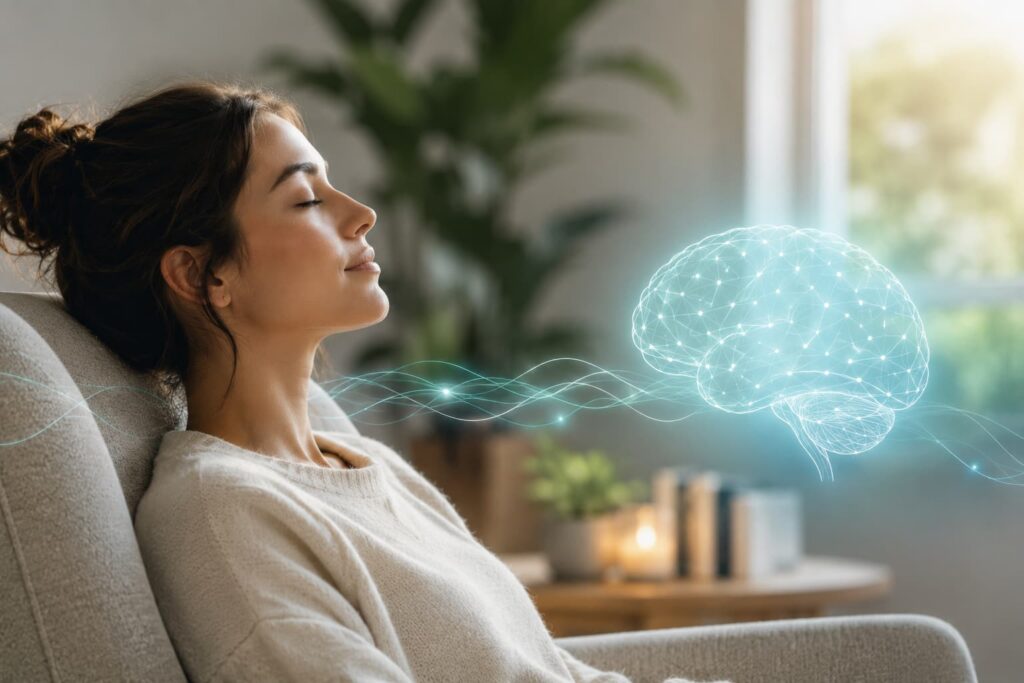
A closer look at a non-medication approach to anxiety treatment
Anxiety disorders are among the most common mental health conditions in the world, affecting hundreds of millions of people. For many, medication offers real relief. But medication doesn’t work for everyone, and not everyone wants it.
Side effects, concerns about long-term medication use, or simply a preference for non-pharmaceutical care lead a growing number of people to ask: is there another way?
Neurofeedback is one approach that has been studied as a non-medication treatment for anxiety for several decades. While the evidence is still developing, research has explored whether EEG neurofeedback may help people improve regulation of attention, arousal, and emotional responses associated with anxiety.
Here’s what you actually need to know about neurofeedback and anxiety.
What Is Neurofeedback?
Neurofeedback is a type of biofeedback that trains your brain to regulate its own electrical activity. During a session, sensors are placed on your scalp to measure your brainwaves in real time using an electroencephalogram (EEG). That data is then fed back to the person, usually through a video, audio, or game-based display. This gives the brain feedback about what it’s doing and allows it to gradually learn to shift its patterns.
The process is generally based on learning principles such as operant conditioning. When the EEG activity being trained moves in the desired direction, the person receives feedback, allowing the brain to gradually learn to regulate that activity. Over time, the goal is for the brain to become better at regulating the activity being trained, including outside of sessions.
No electrodes deliver current. Nothing enters the body. The brain does the learning – the technology just holds up a mirror to help guide the process.
What Does Anxiety Look Like in the Brain?
Anxiety involves more than how we feel emotionally. It also involves brain networks involved in threat detection, attention, arousal, and emotional regulation.
Research has found differences in the way several of these systems function in people with anxiety disorders, including networks involving the amygdala and prefrontal regions of the brain. Brainwave patterns have also been studied, although there is no single EEG pattern that defines anxiety for everyone.
This is important because neurofeedback isn’t simply about “turning down” one brainwave. Depending on the person’s needs, training may focus on helping the brain develop more stable patterns of arousal, attention, and self-regulation.
The goal is not to eliminate anxiety altogether. Instead, the aim is to help the brain become more flexible in how it responds to stress and perceived threat.
What Does the Research Say About Neurofeedback for Anxiety?
The evidence base for neurofeedback and anxiety is growing, though still developing compared to established treatments like cognitive behavioral therapy (CBT) or medication.
Research specifically examining EEG neurofeedback for anxiety has reported promising findings. A systematic review of biofeedback and neurofeedback for anxiety disorders found that biofeedback overall was superior to wait-list conditions, but it has not been shown to be superior to active treatments. A 2021 review of EEG neurofeedback for anxiety disorders and PTSD found positive findings across studies.
That said, the field isn’t without its caveats. Many studies have relatively small sample sizes, protocols vary widely, and the placebo effect in neurofeedback research can be tricky to control for. These limitations mean there is still more to learn about which neurofeedback approaches work best, for whom, and how they compare with other treatments.
Who Might Consider Neurofeedback?
Neurofeedback may be one option to discuss with a qualified provider if you:
- Prefer a non-medication approach or are looking for a complementary treatment
- Haven’t found enough relief from treatments you’ve already tried
- Struggle with medication side effects
- Have anxiety alongside other concerns, such as attention difficulties, trauma-related symptoms, or sleep problems – areas where neurofeedback has also been studied
- Are open to a treatment approach that involves repeated sessions
Neurofeedback is also used with children and adolescents. For some families, a non-medication approach is appealing, particularly when they want to explore additional options alongside established treatments.
What a Typical Course of Neurofeedback Looks Like
Neurofeedback is not a quick fix. A course of neurofeedback typically involves multiple sessions. The specific number of sessions and frequency, however, can vary considerably depending on the person, the training approach, and the goals of treatment.
In our clinic, for example, treatment is typically 20-30 sessions (twice a week for 10-15 weeks). Before treatment begins, we complete an assessment to better understand symptoms, goals, and relevant brain activity. This information helps guide the training approach.
Progress tends to be gradual. Some people notice changes relatively early in training, while others need more time. And as with most therapies, the benefits tend to develop over time and deepen with consistency.
Sessions themselves are typically calm and low-effort. You sit in a chair, watch a screen or listen to audio, and let your brain do its learning. Many people find the sessions relaxing.
The Honest Trade-offs
Cost can be a barrier and neurofeedback is not widely covered by insurance. Time is another consideration because treatment usually involves multiple sessions over a period of weeks or months.
In addition, because neurofeedback is a specialized skill, the training and experience of the practitioner are important considerations when choosing a provider. A qualified practitioner can individualize training based on your symptoms, goals, assessment findings, and response over time. If you’re considering neurofeedback, look for a practitioner with appropriate clinical credentials, relevant neurofeedback training, and certification through an established professional organization.
If you’re experiencing severe or rapidly worsening anxiety and need relief quickly, neurofeedback may not be appropriate as the only treatment. More immediate or intensive support may be appropriate depending on the situation.
Can Neurofeedback Be Used Alongside Other Anxiety Treatments?
Neurofeedback can be used alongside therapy, including CBT and other evidence-based approaches. Some practitioners also incorporate strategies around sleep, exercise, nutrition, and stress management, which can support overall brain and mental health.
For people who take medication and are also interested in non-medication approaches, neurofeedback may be used as part of a broader treatment plan. If you are considering reducing or discontinuing medication, that decision should always be made with the prescribing clinician.
The Bottom Line
Neurofeedback is not a replacement for every treatment for anxiety, and it is not a quick fix. But for people looking for a non-medication, brain-based approach, it may be worth discussing with a qualified provider.
The research on neurofeedback for anxiety is promising and continues to evolve.
If you’ve been looking for options beyond medication, neurofeedback may be one approach to consider as part of a personalized treatment plan.
Looking for a Non-Medication Approach to Anxiety?
If you’re interested in learning whether neurofeedback may be appropriate for you or someone you care about, we’re happy to answer your questions.
Our approach begins with understanding your individual concerns, goals, and needs. From there, we can discuss whether neurofeedback may be a good fit and what treatment could look like.
Contact us to schedule a complementary consultation or learn more about neurofeedback for anxiety.
Always consult with a qualified mental health professional before beginning any new treatment for anxiety. Neurofeedback should be considered as part of a comprehensive, personalized care plan.